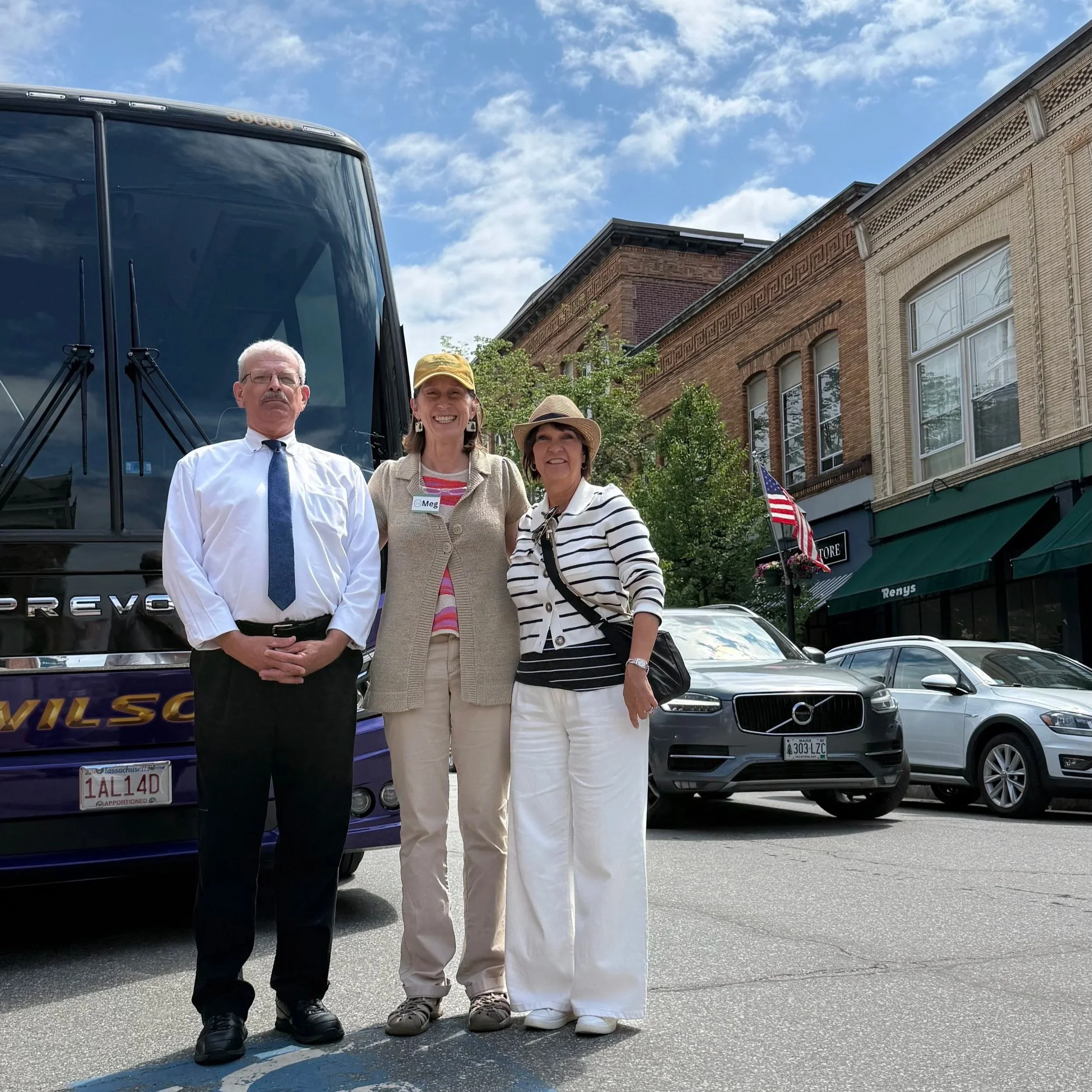
Seneca Falls, NY Road Trip - Women's History Bucket List!
I’ve traveled all around the United States, but for years now, I couldn’t quite figure out how to get to Seneca Falls, New York, to pay my respects at the Women’s Rights National Historic Park. The city was the site of the first-ever women’s rights convention, held in 1848. “Seneca Falls” is in the subtitle of my Women’s History Walking Tour, where we explore the ways women in Bath, Maine stepped out into public life in the 19th century. Far western New York is an 8-hour drive from Maine in 2026! I just had to get there! But how? And when?
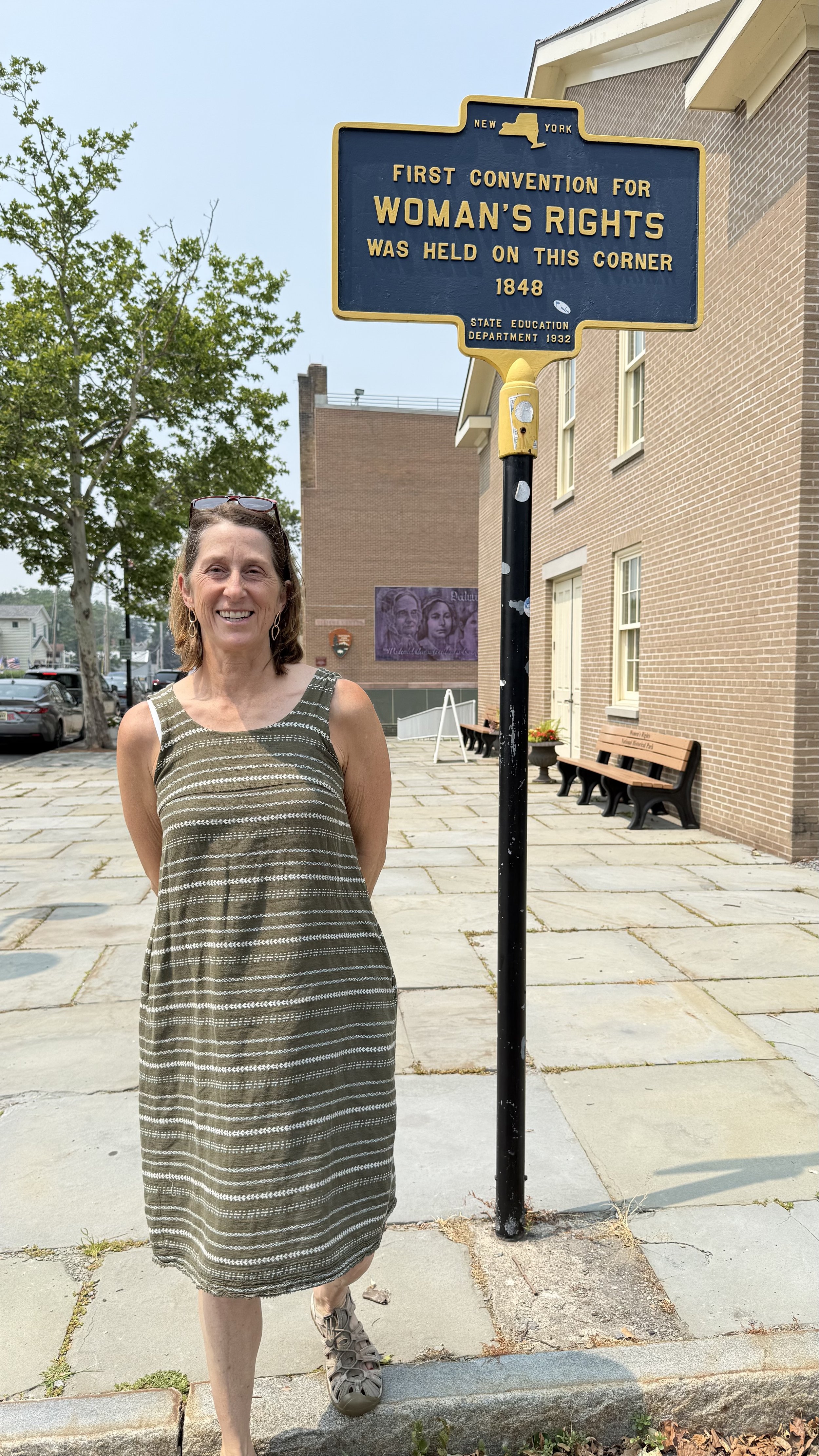
The Wesleyan Chapel, to my right in the photo above, is the center piece of any visit to Seneca Falls.
Well, this summer, a friend who has a house in the Berkshires, in western Massachusetts, invited me to visit. I whipped open Google Maps and realized it was exactly halfway to Seneca Falls. Thus, I could break an 8-hour drive into two 4-hour chunks. My friend Mary agreed to join me and a plan was made!
We visited in July, on one of those hazy hot days when the whole of the northeast U.S. was impacted by smoke from Canadian wildfires. That was tough but nothing compared to the hardships endured by the early advocates for women’s rights!
The visit was wonderful and well worth the drive. The main attraction is the Wesleyan Chapel, where the convention took place. The National Park Service runs a wonderful visitor center, as well, with exhibits, a gift shop and movie. And there are other related sites nearby. Watch a video snippet from my visit.
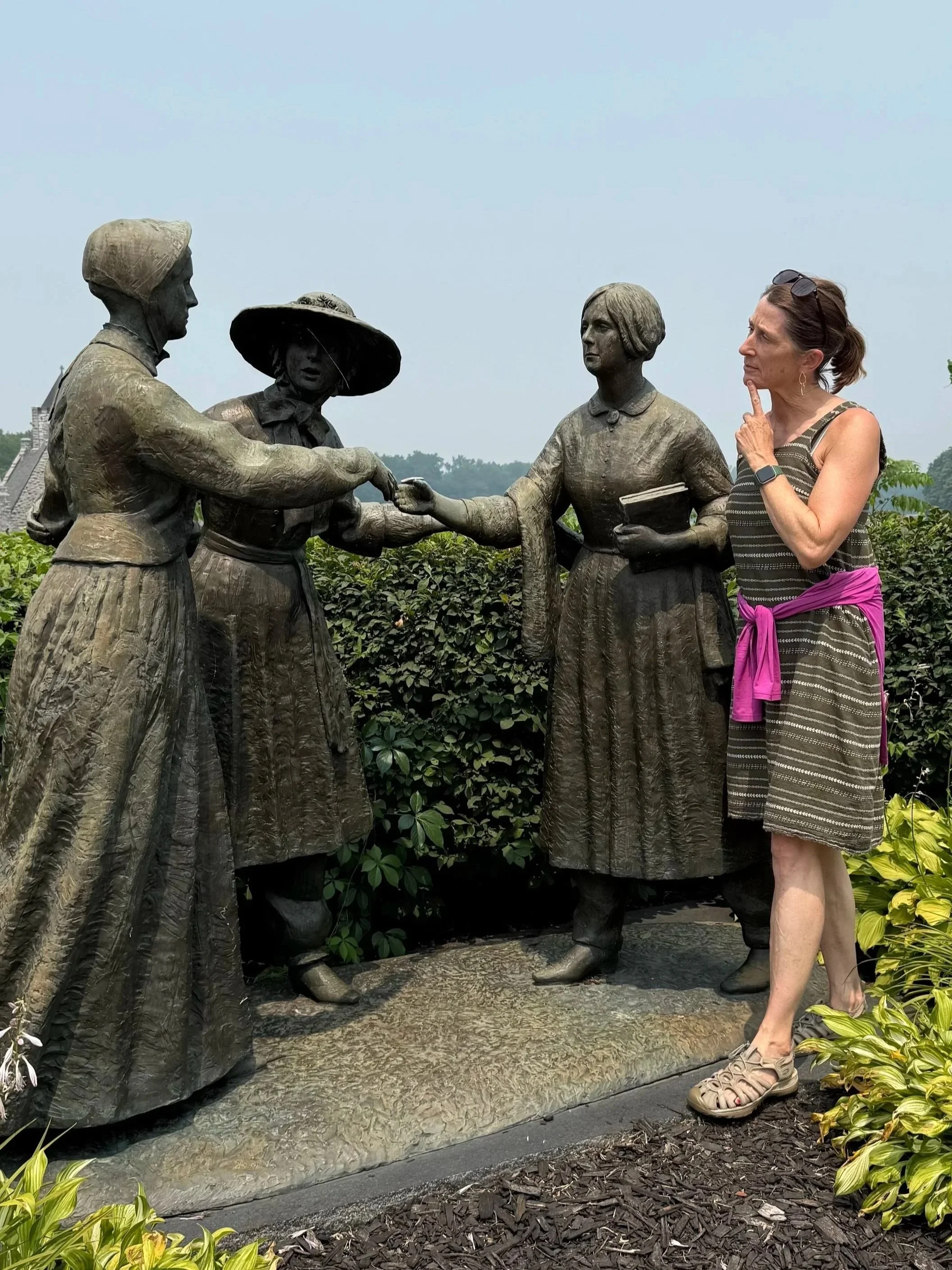
This sculpture in Seneca Falls, NY commemorates the moment Amelia Bloomer (note the pantaloons) introduced her two friends, Susan B. Anthony and Elizabeth Cady Stanton.
The visit answered a burning question for me: Why Seneca Falls? Well, in early July 1848, well-known women’s rights and anti-slavery advocate, and Quaker Lucretia Mott came to visit her friend Elizabeth Cady Stanton, who lived in Seneca Falls. Stanton and her husband, a prominent attorney and ally, had moved to the New York city along the Erie Canal for her husband’s health (and lived in a house gifted to her by her father). Mott and Stanton had met a few years before at the 1840 World Anti-Slavery Convention in London and became fast friends after facing discrimination as women at the proceedings.
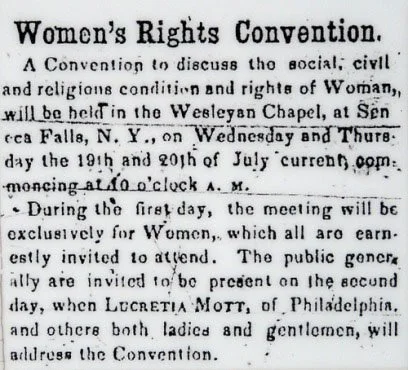
Ads were placed in newspapers to help spread the word about the convention on short notice. Library of Congress.
During the visit, Jane Hunt hosted a tea on July 9 for Mott (the guest of honor), two other Quaker friends, and Stanton (the only non-Quaker in attendance). This was more than a social occasion. It was here that the idea for the convention was hatched. Mott would be the VIP—her celebrity would bring in other names. The only problem? Mott’s calendar was full and she only had time to spare on July 19 and 20, giving them a mere 10 days to plan! Ads were placed in newspapers and the word spread.
What are some connections to Bath’s Women’s History Walking Tour?
On our walking tour in Bath, we tell the story of Alice May Douglas, a woman whose family had Quaker roots and was a major figure in women’s history in Bath. The influence of Quaker women in Seneca Falls is clear. These women had experience speaking out in public in Quaker meeting. And two of the core tenets of Quakerism, equality and community, surely inspired Alice May Douglas’ work as a writer and advocate for temperance and peace locally in Bath, and in publications nationwide.
Also, despite some objections, voting rights for women was added to the “Delcaration of Rights”. It was the only right that did not earn unanimous approval. For some, voting rights was a step too far. It was too controversial.
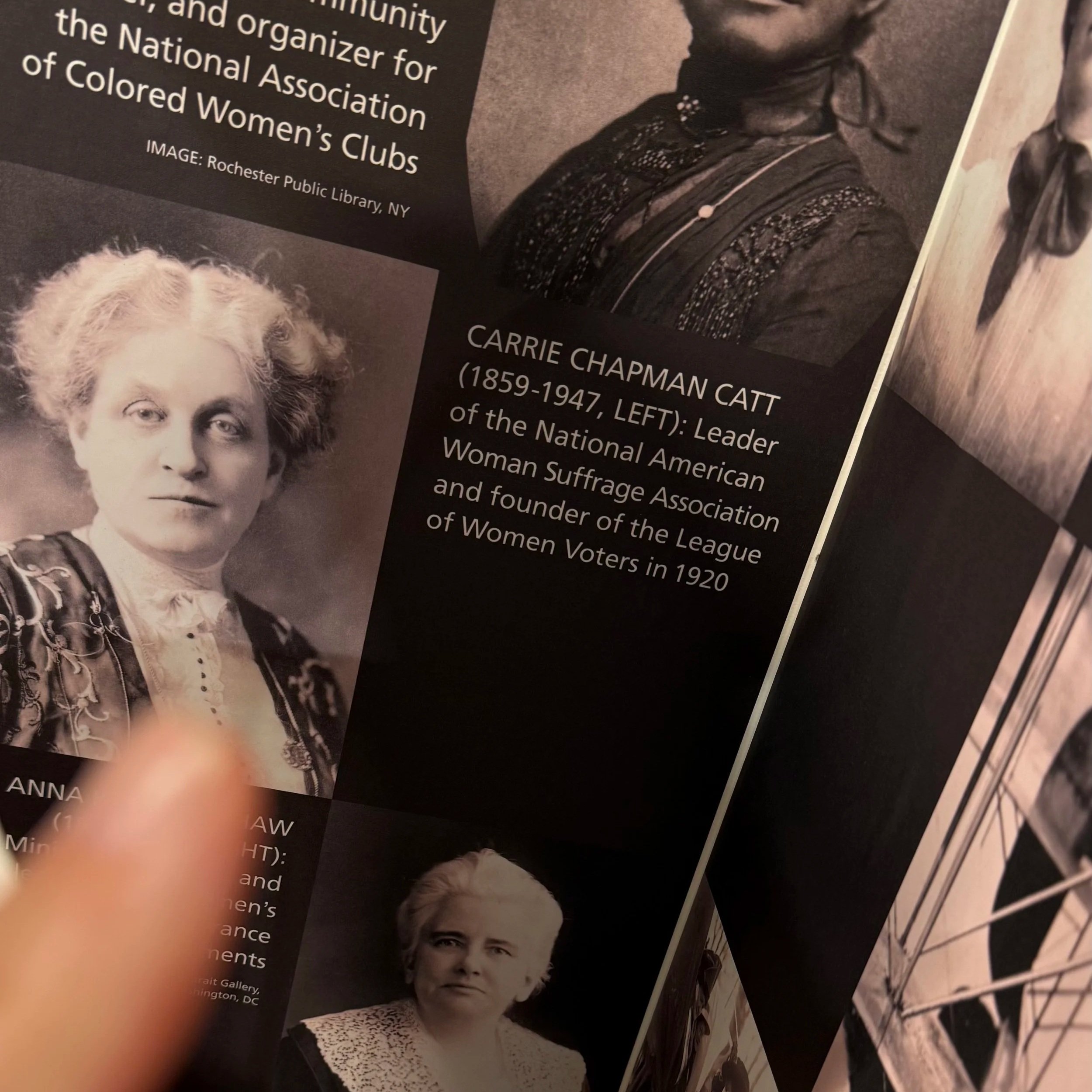
Carrie Chapman Catt, who came to Bath in 1917 to promote women’s suffrage, gets just the tiniest mention in the Seneca Falls exhibits.
We can see that debate in Bath as well, and it took an outsider, Camilla Ashe Sewall, to lead the way. While living on Washington Street in Bath in the 1910s, Sewall partnered with Carrie Chapman Catt, who succeeded Stanton as the head of the American Women’s Suffrage Association. Camilla was from California and perhaps brought some of her progressive West Coast ideas with her when she married Bath scion Harold Sewall. Camilla and Harold hosted suffrage events at their house and invited Catt to speak downtown at the Columbia Theater on the eve of the suffrage vote in Maine in September 1917. Join us on a tour (or scroll down) to find out what happened next!
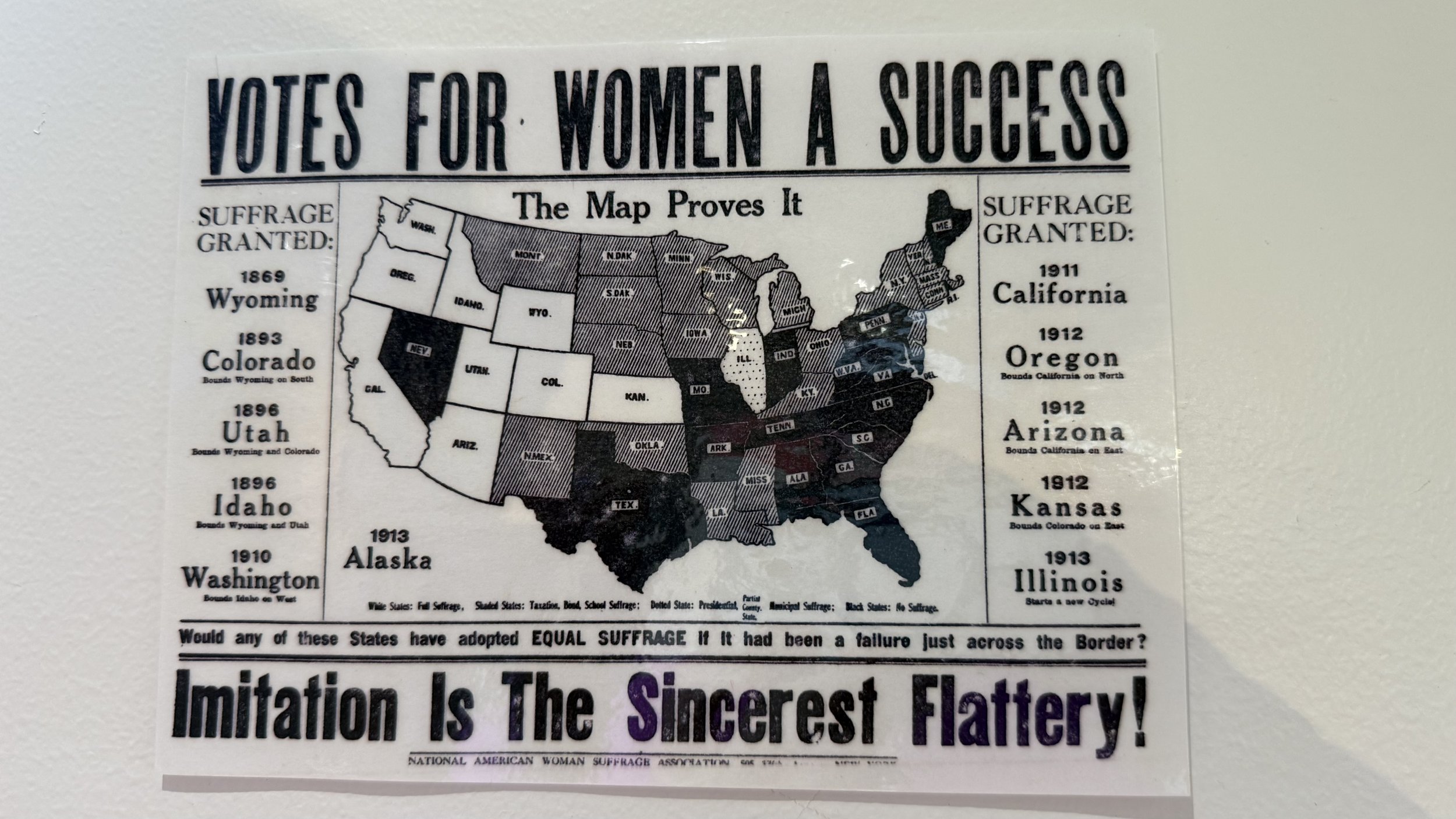
Despite the efforts of Camilla Sewall and Carrie Chapman Catt, Maine voters (men) denied women suffrage when it was put to referendum in 1917.
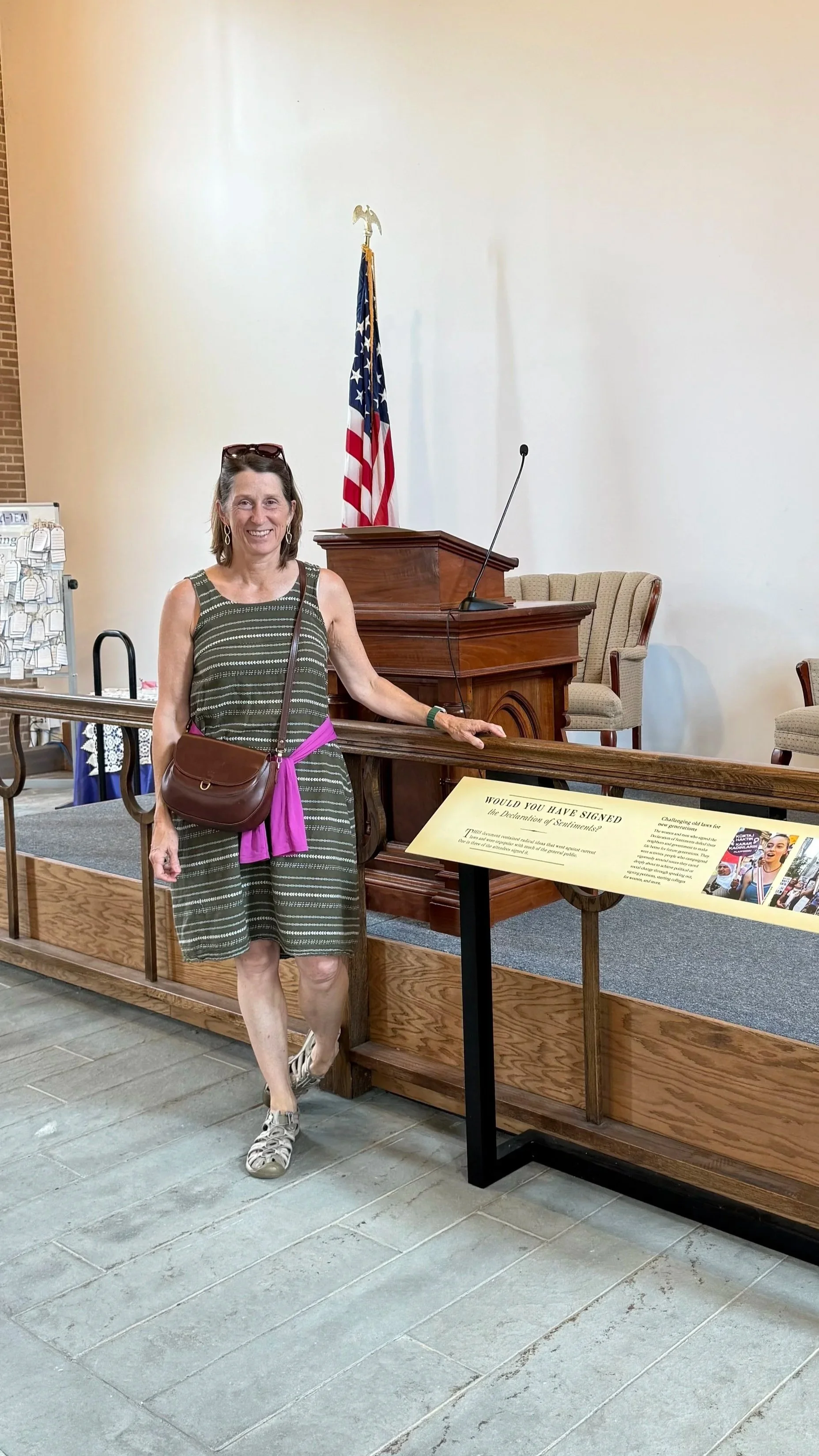
Here, Elizabeth Cady Stanton spoke from the podium, reading the Declaration of Sentiments (which she had written only days before) in July 1848. The Wesleyan Chapel changed over the years but was preserved and restored as it was in 1848.
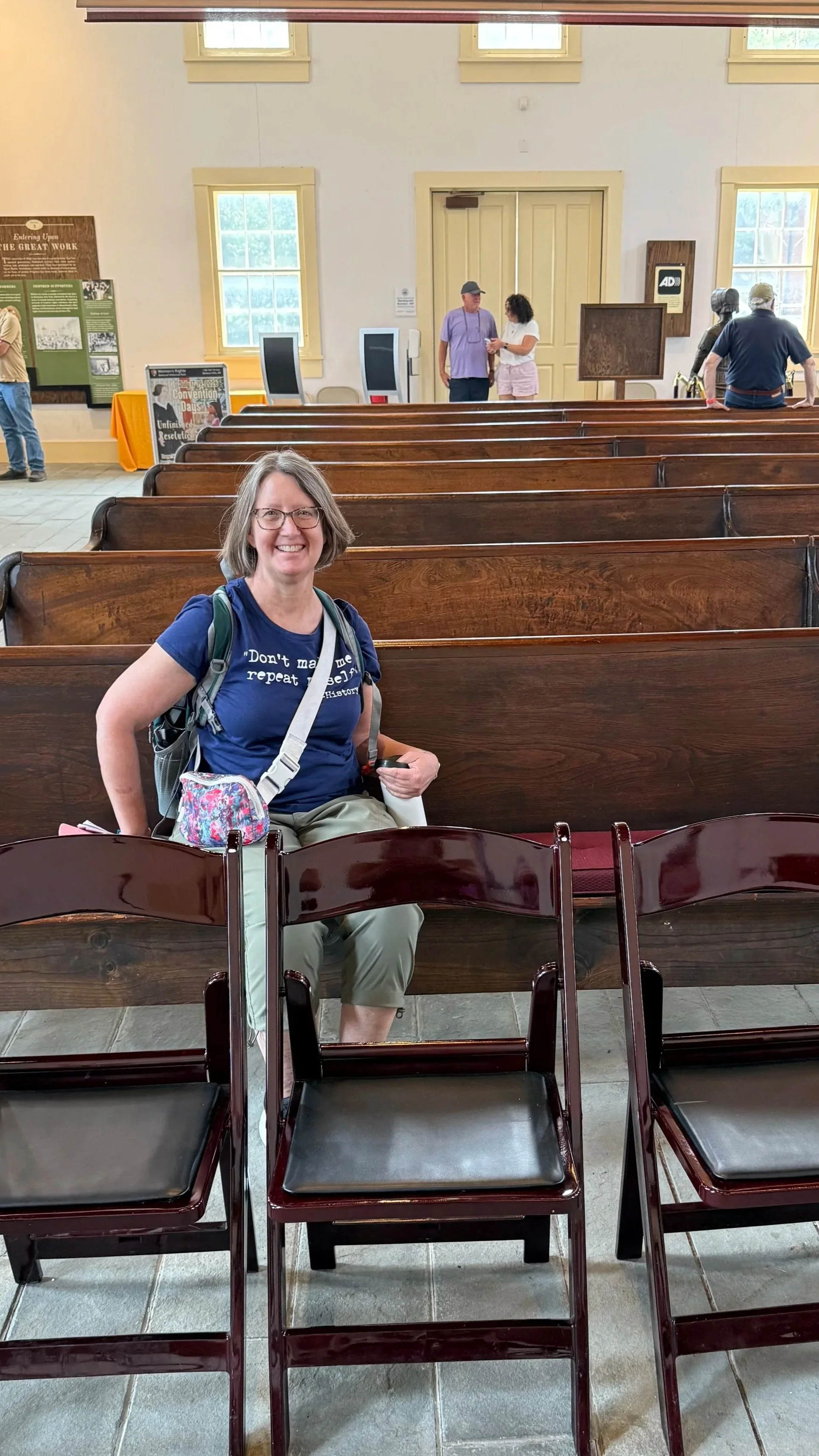
Frederick Douglass, Lucretia Mott and hundreds of others (like my friend Mary, above) would have been in the audience. The first day of the convention was women only; men were invited to attend the second day.
The story of women’s rights is still being told. What I love about all our tours is the insights shared and connections made among participants between the past and today.
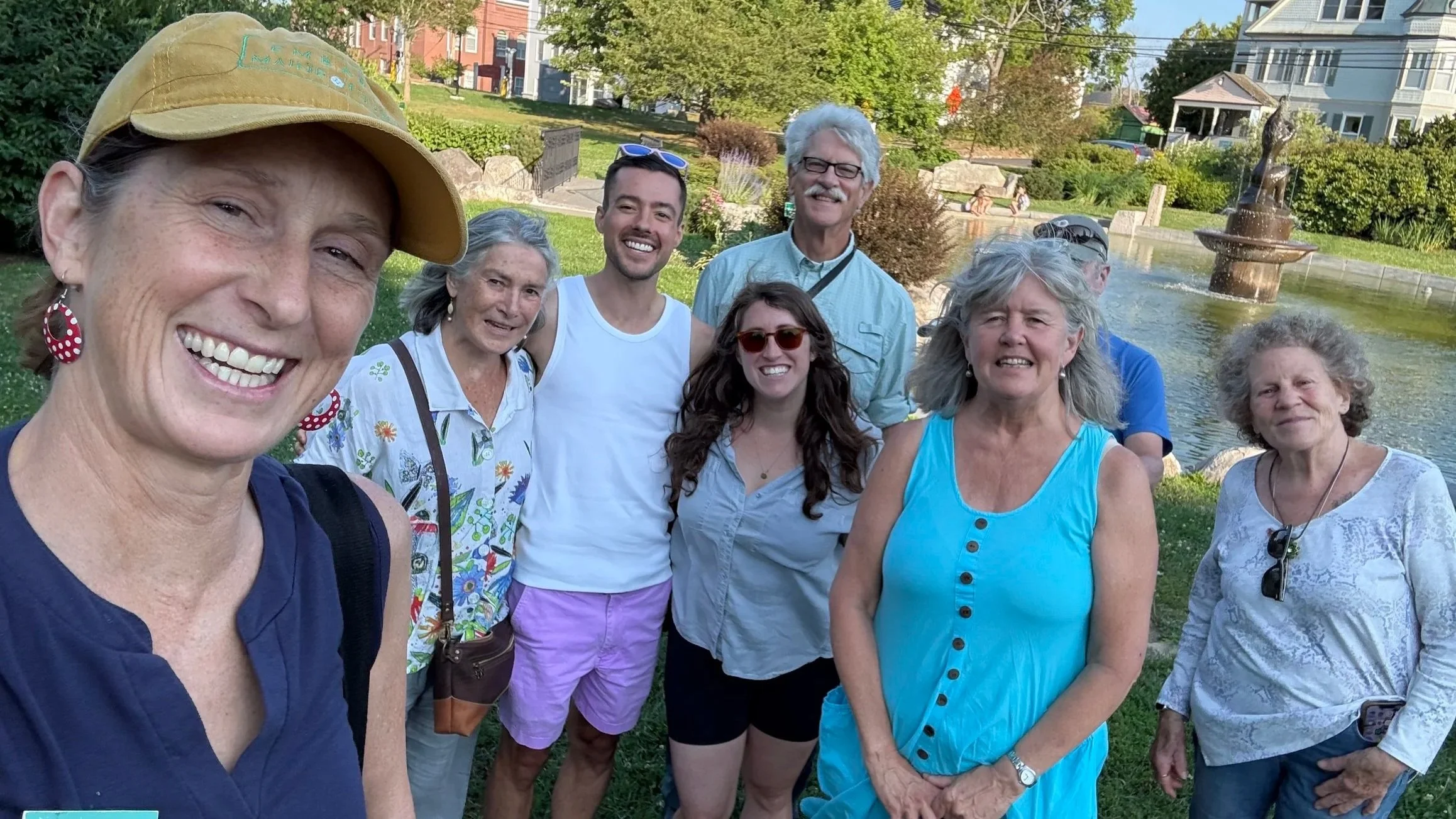
Some powerhouse advocates attended our recent Women’s History Walking Tour! I am wearing my new “Rosie the Riveter” earrings purchased at the National Park Service gift shop!
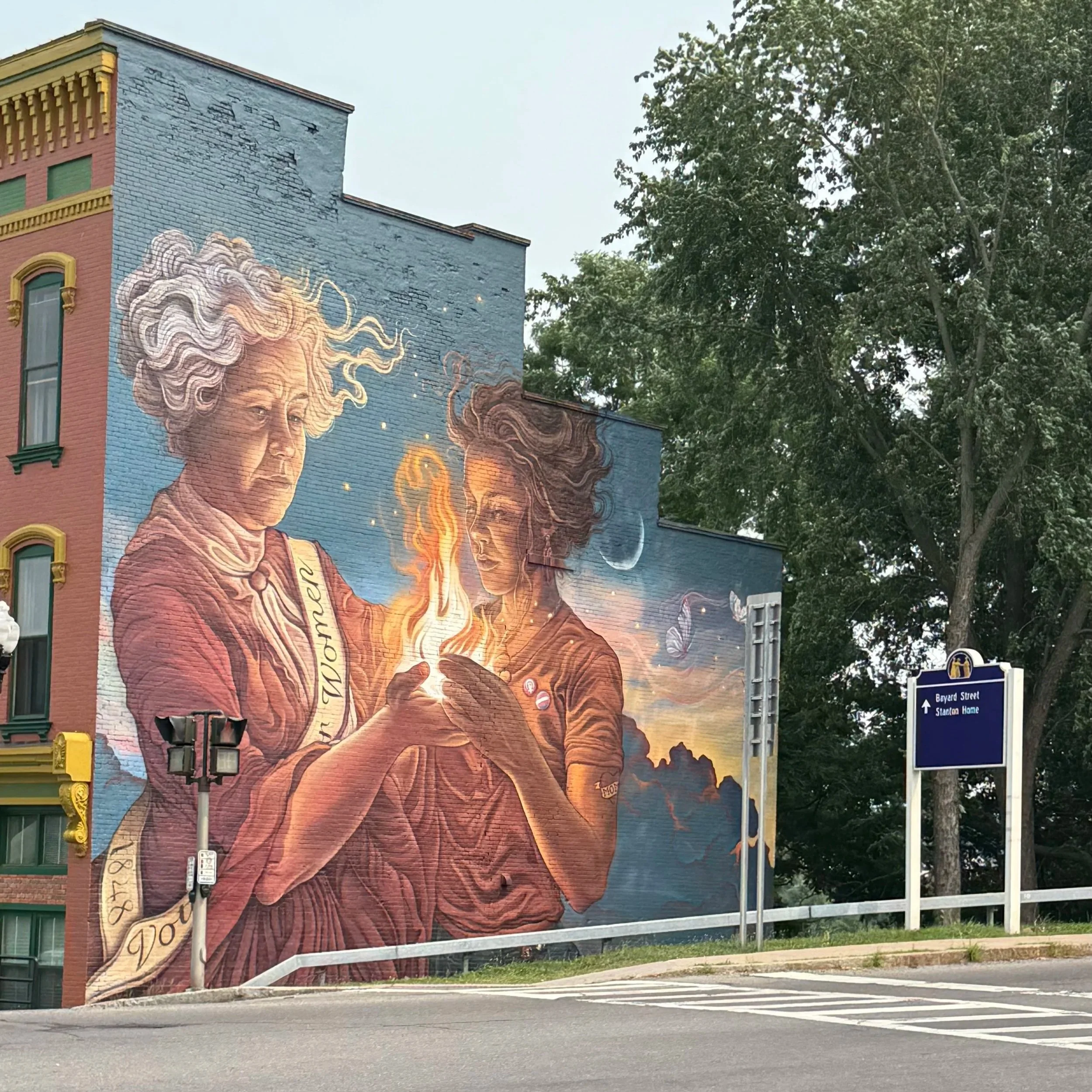
“The Flamekeepers” pass the torch from history to today, sashes to buttons, in downtown Seneca Falls.